Addressing Temperature Measurement Challenges in Industrial Automation
In many industrial environments, precise temperature monitoring is critical for process control and equipment protection. Engineers often face challenges when integrating RTD sensors into legacy control systems like the Allen-Bradley SLC 500 platform. The 1746-NR8 module provides a robust solution for these applications, offering compatibility with multiple RTD sensor types and direct resistance inputs.
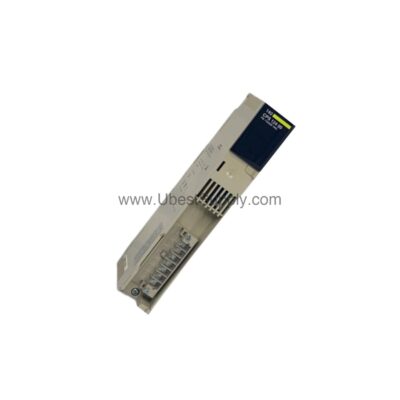
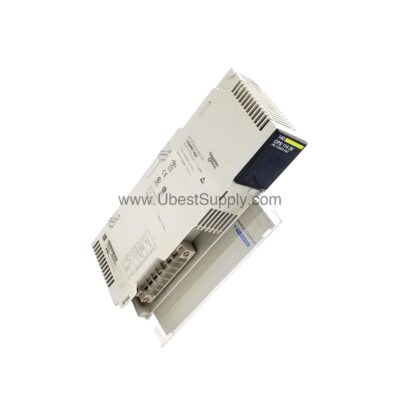
Introducing the Allen-Bradley 1746-NR8 RTD/Resistance Analog Input Module
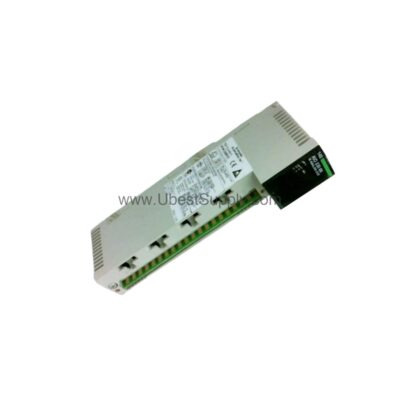
The Allen-Bradley 1746-NR8 is an RTD/Resistance Analog Input Module designed for the SLC 500 series. It features eight channels that accept signals from RTD sensors such as Platinum (385), Platinum (3916), Copper (416), Nickel (618), Nickel (672), and Nickel Iron. This module also supports direct resistance inputs, making it versatile for various measurement tasks.
Part of the SLC 500 family, the 1746-NR8 is powered through the backplane and fits into any chassis slot except Slot 0. It is compatible with both fixed and modular SLC 500 hardware styles, simplifying integration into existing systems.
Technical Specifications Analysis
The 1746-NR8 operates with a backplane current of 100 mA at 5 Volts DC and 55 mA at 24 Volts DC, with a maximum power consumption of 1.82 Watts. Its update time ranges from 6 milliseconds to 2 seconds, and the step response is 60 milliseconds in and 2.5 milliseconds out. The module supports a resolution of 0.01 degrees Celsius and uses sigma-delta modulation for analog-to-digital conversion.
Operating temperature range is 0 to 60 degrees Celsius, with storage from -40 to 85 degrees Celsius. The module supports 2-wire, 3-wire, and 4-wire RTD sensors, and its auto-calibration process occurs at power-up and can be programmed every 5 minutes.

Application Scenarios and Use Cases
In a chemical processing plant, the 1746-NR8 can monitor reactor temperatures using Platinum (385) RTD sensors, ensuring precise control of exothermic reactions. The module's resistance input capability also allows for measuring displacement in mechanical systems, such as valve position feedback, by tracking resistance changes.
For HVAC systems in large facilities, the module can interface with Nickel (618) RTD sensors to monitor duct temperatures, providing data for efficient climate control. Its compatibility with multiple RTD types makes it adaptable to various sensor specifications.
Customer Case Scenario
Consider a manufacturing facility that needs to upgrade its temperature monitoring for a batch process. By integrating the 1746-NR8 into their existing SLC 500 system, they can replace older analog modules and achieve higher accuracy with 0.01 degree Celsius resolution. This upgrade reduces measurement errors and improves product consistency.
Compatibility and Integration
The 1746-NR8 is designed exclusively for SLC 500 systems and works with both fixed and modular chassis. It does not require an external power supply, as it draws power from the backplane. The module supports 2-wire, 3-wire, and 4-wire RTD sensors, with recommended cabling such as Belden 9501 for 2-wire and Belden 9533 or 83503 for 3-wire or 4-wire setups.

For accurate measurements, users should avoid long cable runs with 2-wire RTDs or use lower gauge wire to minimize resistance effects. The module's terminal block is the Allen-Bradley 1746-RT-35, designed for single wire connections.
Frequently Asked Questions About the 1746-NR8
What RTD sensor types are compatible with the 1746-NR8?
The 1746-NR8 supports Platinum (385) and Platinum (3916) in 100, 200, 500, and 1000 ohm variants, Copper (426) 10 ohm, Nickel (618) 120 ohm, Nickel (672) 120 ohm, and Nickel Iron (518) 604 ohm. It also accepts direct resistance inputs from 0 to 150 ohms, 0 to 500 ohms, 0 to 1000 ohms, and 0 to 300 ohms.
What is the power consumption of the 1746-NR8 module?
The module consumes a maximum of 1.82 Watts, with 0.5 Watts at 5 Volts DC and 1.32 Watts at 24 Volts DC. Backplane current is 100 mA at 5 Volts DC and 55 mA at 24 Volts DC.
Can the 1746-NR8 be used in any SLC 500 chassis slot?
Yes, the module can be placed in any slot except Slot 0. It occupies a single slot and is compatible with both fixed and modular SLC 500 hardware styles.
What is the update time for the 1746-NR8?
The update time ranges from 6 milliseconds to 2 seconds, depending on configuration. The step response is 60 milliseconds for input and 2.5 milliseconds for output.
Conclusion and Outlook
The Allen-Bradley 1746-NR8 remains a reliable choice for temperature and resistance measurement in SLC 500 systems. As industrial automation evolves, modules like this continue to support legacy infrastructure while meeting modern accuracy requirements. For current lifecycle status and availability, please verify with Petro Auto Tech before ordering.