Market Trends Driving Demand for Analog Combination Modules
In modern industrial automation, the need for precise analog signal processing continues to grow as manufacturers adopt Industry 4.0 practices. The Allen-Bradley 1746-FIO4V addresses this demand by combining input and output channels in a single module for the SLC 500 platform. This integration helps reduce wiring complexity and cabinet space, which is critical for retrofitting legacy systems.
As plants upgrade to more data-driven operations, modules like the 1746-FIO4V enable seamless conversion of process variables into digital values. The trend toward modular, scalable control systems further supports the relevance of this analog combination module in today's market.
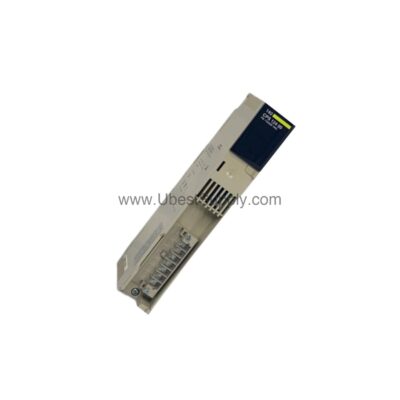
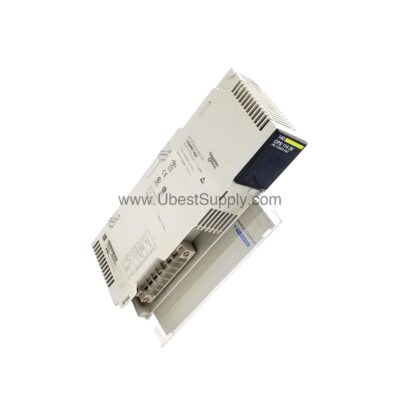
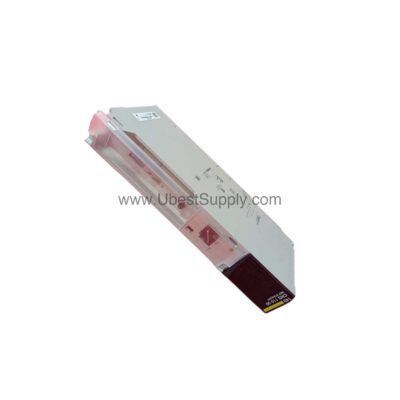
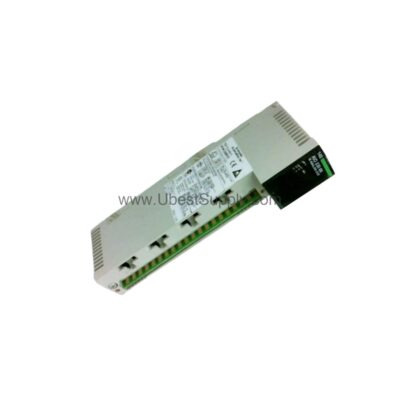
Introducing the 1746-FIO4V Analog Combination Module
When engineers face the challenge of monitoring and controlling analog signals in a compact footprint, the Allen-Bradley 1746-FIO4V offers a reliable solution. This SLC 500 analog combination module features two inputs configurable for 0 to 20 mA or 0 to +10VDC and two voltage outputs with a nominal range of -10 to +10VDC. It is designed to work exclusively with the SLC 500 controller platform from Rockwell Automation.
The module provides fast analog input channels with a bandwidth of 7 kilohertz and a step response of 100 milliseconds in and 2.5 milliseconds out at 95%. Its update time is 512 microseconds, making it suitable for applications requiring rapid signal acquisition and output.
Technical Specifications Analysis
The 1746-FIO4V operates with a backplane current of 55 milliamps at 5 Volts and 150 milliamps at 24 Volts. Its input signal range is 0 to 20 mA nominal with a maximum of 0 to 30 mA, while the output signal range is –10 to 10V – 1 LSB under normal conditions. The module offers a resolution of 12 bits for inputs and 14 bits for outputs, ensuring accurate signal representation.
Additionally, the module features a step response of 100 milliseconds for inputs and 2.5 milliseconds for outputs, along with an update time of 512 microseconds. These specifications make it a fast analog combination module for time-sensitive control loops.

Application Scenarios and Use Cases
In closed-loop process control, the 1746-FIO4V can receive a 4-20 mA signal from a pressure transmitter as the process variable and output a -10 to +10VDC signal to a variable frequency drive for pump speed regulation. This configuration allows precise modulation based on real-time conditions.
Another common application is in monitoring systems where the module's two inputs capture voltage or current signals from sensors, while the outputs drive indicators or data loggers. The fast update time supports high-speed data acquisition in packaging or material handling lines.
Customer Case Scenario
As an illustration, a water treatment facility upgraded its SLC 500 system with the 1746-FIO4V to replace separate input and output modules. The combination module reduced chassis slot usage and simplified wiring, leading to faster commissioning and lower maintenance costs.
Compatibility and Integration
The 1746-FIO4V is designed for the SLC 500 controller platform from Rockwell Automation. It mounts directly into a SLC 500 chassis and communicates via the backplane using 16-bit two's complement binary communication. The module is compatible with 14 AWG connecting cable and features field wiring to backplane isolation of 500V DC.
When installing, users should consider ambient temperature and electrical noise, placing the module away from AC voltage sources or high-level DC voltage to ensure reliable operation.

Comparison with Similar Modules
Compared to other SLC 500 analog modules, the 1746-FIO4V stands out for its combination of two inputs and two outputs in a single unit. For instance, while a dedicated input module like the 1746-NI8 offers eight inputs, the 1746-FIO4V provides a balanced mix for applications needing both input and output channels. Its fast update time of 512 microseconds and bandwidth of 7 kilohertz make it suitable for high-speed loops, whereas standard modules may have slower response times.
Below is a bullet-point comparison highlighting key differences:
- 1746-FIO4V: 2 inputs (voltage/current), 2 voltage outputs, 12-bit input resolution, 14-bit output resolution, 512 µs update time.
- 1746-NI8: 8 inputs (voltage/current), no outputs, 16-bit resolution, slower update time.
- 1746-NO4V: 4 voltage outputs, no inputs, 14-bit resolution, similar update time.
Company Strength and Supply Assurance
Petro Auto Tech is a trusted industrial automation parts supplier with extensive experience in providing Allen-Bradley components. We ensure that each 1746-FIO4V module is sourced from reliable channels and tested for quality. Please verify current lifecycle status and availability with Petro Auto Tech before ordering.
Frequently Asked Questions About the 1746-FIO4V
What is the input signal range of the 1746-FIO4V?
The input signal range is 0 to 20 mA nominal with a maximum of 0 to 30 mA. For voltage inputs, the range is 0 to +10VDC.
How many outputs does the 1746-FIO4V have?
The module has two voltage outputs with a nominal range of -10 to +10VDC. The output signal range is –10 to 10V – 1 LSB under normal conditions.
What is the update time of the 1746-FIO4V?
The update time is 512 microseconds, making it suitable for fast analog control applications.
Is the 1746-FIO4V compatible with other SLC 500 modules?
Yes, the 1746-FIO4V is designed for the SLC 500 controller platform and mounts in a standard SLC 500 chassis. It communicates via the backplane.
Conclusion and Future Outlook
The Allen-Bradley 1746-FIO4V remains a valuable component for SLC 500 systems requiring fast analog I/O in a compact form factor. As industrial facilities continue to modernize, modules like this enable cost-effective upgrades without replacing entire control platforms. Petro Auto Tech is ready to support your automation needs with this reliable analog combination module.