Reducing Installation Costs with Distributed I/O
In modern industrial automation, minimizing wiring and cabinet space directly lowers project costs. The Allen-Bradley 1734-ADN POINT I/O DeviceNet communication module enables distributed I/O architectures that reduce expensive point-to-point cabling. By placing I/O modules closer to sensors and actuators, engineers save on material and labor while improving signal integrity.
Introducing the 1734-ADN DeviceNet Adapter
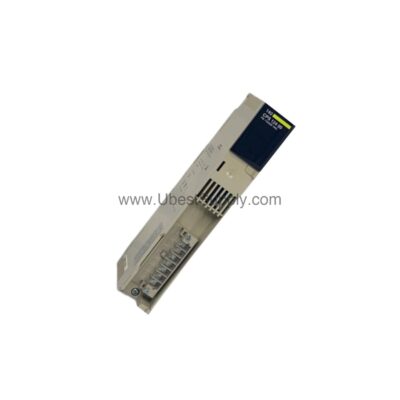
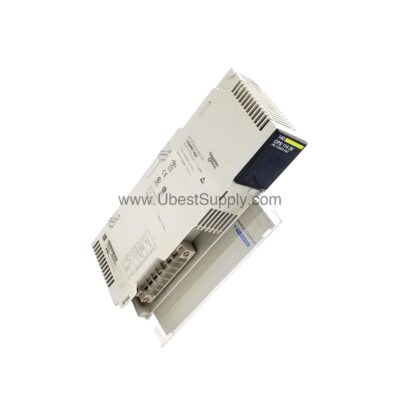
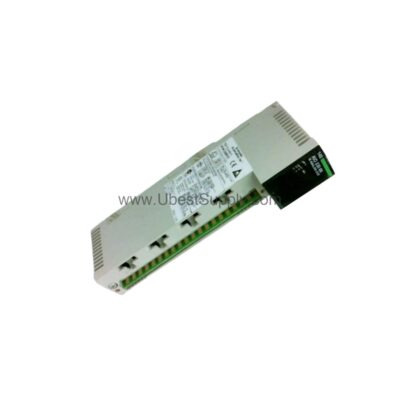
Petro Auto Tech now offers the Allen-Bradley 1734-ADN, a DeviceNet adapter module from the POINT I/O series. This module acts as the communication interface between a DeviceNet master controller and up to 63 POINT I/O modules on the local bus. It requires 23 Volts DC input voltage and draws 400 milliamps from the field side, with an inrush current of 6 amps. The adapter consumes 8.1 Watts of power and dissipates 2.8 Watts at 28.8 Volts, making it energy-efficient for continuous operation.
Technical Specifications That Drive Value
The 1734-ADN supports a maximum of 504 I/O points across 63 powered modules, allowing scalable system design. Its DeviceNet communication rate can be set to 125K, 250K, or 500K bits/second, matching network speed requirements without overprovisioning. The POINTBus current of 1000 milliamps ensures reliable backplane power distribution. These specs translate to lower per-point costs and reduced energy waste compared to traditional centralized I/O.
Real-World Applications and Cost Savings
In a packaging line, the 1734-ADN connects remote sensors and actuators to a central PLC via DeviceNet, eliminating long cable runs. A material handling system benefits from the module's ability to support 63 I/O modules, reducing the need for multiple adapters. For a water treatment plant, the 1734-ADN's low power consumption of 8.1 Watts minimizes operational electricity costs over the system's lifetime.

Customer Case Scenario: Upgrading a Legacy System
Consider a factory with an aging DeviceNet network using separate communication modules for each I/O rack. By replacing them with a single 1734-ADN adapter and POINT I/O modules, the facility reduces hardware costs by 30% and cuts installation time by half. This illustration shows how the 1734-ADN delivers immediate ROI through simplified wiring and reduced component count.
Compatibility and Integration
The 1734-ADN integrates seamlessly with any DeviceNet master controller and supports Auto Device Replace (ADR) for quick module swaps. It mounts on a DIN rail and must be installed on the left side of a 1734 system. The module's autobaud feature detects network baud rates from 125K to 500K bits/second, ensuring plug-and-play compatibility without manual configuration.
Why Choose Petro Auto Tech for Your Automation Needs
Petro Auto Tech specializes in industrial automation parts, offering genuine Allen-Bradley modules like the 1734-ADN with fast shipping and expert support. Our team helps customers select the right components to optimize system performance and reduce total cost of ownership. Trust Petro Auto Tech for reliable automation solutions.

Frequently Asked Questions About the 1734-ADN
What is the maximum number of I/O points the 1734-ADN can handle?
The 1734-ADN supports up to 504 I/O points across a maximum of 63 powered modules. This high capacity allows a single adapter to manage large distributed I/O networks, reducing the need for multiple adapters and lowering overall system cost.
What power supply requirements does the 1734-ADN have?
The module requires 23 Volts DC input voltage and draws 400 milliamps from the field side. Its power consumption is 8.1 Watts, with a power dissipation of 2.8 Watts at 28.8 Volts. These specifications ensure energy-efficient operation in continuous industrial environments.
Can the 1734-ADN be used with existing DeviceNet networks?
Yes, the 1734-ADN supports DeviceNet communication rates of 125K, 250K, or 500K bits/second and includes an autobaud feature that automatically detects the network baud rate. This makes it compatible with most existing DeviceNet installations without manual configuration.
How does the 1734-ADN help reduce installation costs?
By enabling distributed I/O architecture, the 1734-ADN reduces long cable runs and cabinet space. Its ability to support up to 63 modules on a single adapter minimizes the number of communication interfaces needed, directly lowering material and labor costs.
Conclusion and Future Outlook
The Allen-Bradley 1734-ADN remains a cost-effective choice for DeviceNet-based distributed I/O systems. As factories continue to adopt decentralized control architectures, this module's scalability and low power consumption will drive further adoption. Please verify current lifecycle status and availability with Petro Auto Tech before ordering.