Enhancing Distributed I/O with the 1734-ADN
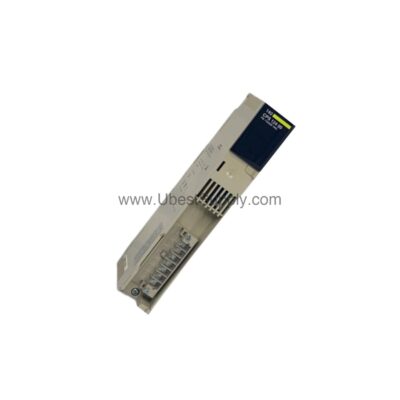
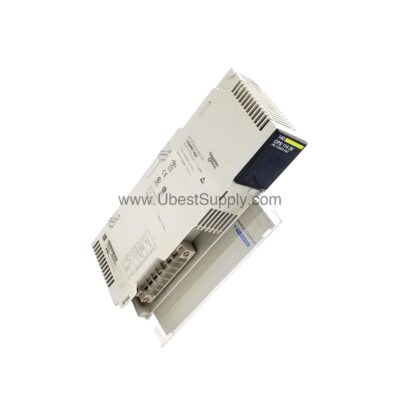
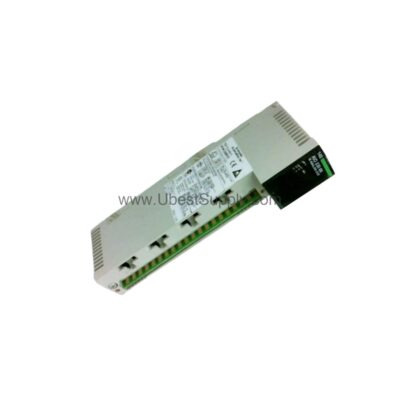
In modern industrial automation, distributed I/O architectures reduce wiring costs and improve system flexibility. The Allen-Bradley 1734-ADN POINT I/O DeviceNet adapter module serves as a critical interface, enabling seamless communication between a DeviceNet master controller and local I/O modules. This module supports up to 63 powered modules and 504 I/O points, making it suitable for medium to large-scale applications.
Engineers often face challenges when integrating multiple I/O points into a centralized control system. The 1734-ADN addresses this by allowing distributed placement of I/O modules along a DIN rail, connected via the integrated DeviceNet port. This approach simplifies installation and maintenance while reducing cable runs.
Technical Specifications Overview
The 1734-ADN operates on a 23 Volts DC input voltage and draws 400 milliamps from the field side, with an inrush current of 6 amps. Its power consumption is rated at 8.1 Watts, and power dissipation reaches 2.8 Watts at 28.8 Volts. The module supplies 1000 milliamps on the POINTBus backplane to power connected I/O modules.
Communication rates are configurable at 125K, 250K, or 500K bits per second via the DeviceNet network. The module includes an Autobaud feature that automatically detects the network baud rate, ensuring compatibility with existing DeviceNet masters. This flexibility allows integration into various network topologies without manual rate configuration.
Application Scenarios in Industrial Environments
In manufacturing plants, the 1734-ADN is ideal for applications requiring remote I/O monitoring and control, such as conveyor systems, packaging lines, and material handling. For example, a facility with multiple conveyor zones can use the adapter to collect sensor data and control actuators locally, reducing the load on the central PLC.
Another common use case is in process industries where distributed I/O points monitor temperature, pressure, and flow. The module's compact DIN-rail mounting and low-density I/O capability make it easy to install in tight spaces near field devices, improving response times and reducing signal noise.

Customer Case Scenario: Streamlining a Packaging Line
Consider a packaging line with 40 I/O points spread across five stations. By deploying the 1734-ADN as the DeviceNet adapter, the system integrator can connect up to 63 modules and 504 points, easily accommodating future expansion. The adapter's Auto Device Replace (ADR) feature simplifies maintenance by automatically transferring configuration parameters to a replacement module, minimizing downtime.
This hypothetical scenario illustrates how the 1734-ADN reduces wiring complexity and enhances system scalability. The module's 1000 milliamps POINTBus current ensures reliable power delivery to all connected I/O modules, even in demanding conditions.
Compatibility and Integration with Control Systems
The 1734-ADN is designed for the POINT I/O platform and mounts on the left side of a 1734 system. It communicates via DeviceNet, a widely adopted open network protocol in industrial automation. The module works with any DeviceNet master controller, including Allen-Bradley ControlLogix, CompactLogix, and SLC 500 families, provided the master supports DeviceNet scanning.
Integration is straightforward: the adapter connects to the DeviceNet trunk line via a standard DeviceNet plug, and local I/O modules attach to its backplane. The thumbwheel switch on the module sets the node address from 0 to 63, with non-volatile memory retaining the address after power cycles. This design ensures consistent network identification.
Market Impact and Business Value
Deploying the 1734-ADN can reduce total cost of ownership by minimizing wiring, panel space, and installation labor. The module's 8.1 Watts power consumption and 2.8 Watts dissipation at 28.8 Volts contribute to energy efficiency in large systems. Additionally, the ADR feature reduces downtime during module replacement, directly impacting production throughput.

For system integrators and end users, the ability to scale I/O capacity up to 504 points without redesigning the network architecture offers long-term flexibility. The 1734-ADN's support for multiple baud rates also future-proofs the installation against network upgrades.
Company Strength and Supply Assurance
Petro Auto Tech is a trusted distributor of industrial automation parts, offering genuine Allen-Bradley products like the 1734-ADN. With a focus on quality and availability, Petro Auto Tech helps engineers and procurement professionals source critical components quickly. Their team provides technical support to ensure correct selection and integration.
Frequently Asked Questions About the 1734-ADN
What is the maximum number of I/O modules the 1734-ADN can support? The module supports up to 63 powered modules and a maximum of 504 I/O points, as specified in the technical data.
What communication rates does the 1734-ADN support? It supports DeviceNet communication rates of 125K, 250K, or 500K bits per second, configurable via the network or Autobaud feature.
Does the 1734-ADN require external power for the field side? Yes, the module requires a 23 Volts DC input voltage for the field side, with a current draw of 400 milliamps and an inrush current of 6 amps.
Can the 1734-ADN be used with other Allen-Bradley controllers? Yes, it works with any DeviceNet master controller, including ControlLogix, CompactLogix, and SLC 500 families, provided they support DeviceNet scanning.
What is the Auto Device Replace (ADR) feature? ADR automatically transfers configuration parameters from a removed device to a replacement module, simplifying maintenance and reducing downtime.
Conclusion and Future Outlook
The Allen-Bradley 1734-ADN remains a reliable choice for distributed I/O applications in DeviceNet networks. Its robust specifications, including 63-module capacity and flexible baud rates, ensure long-term value. As industrial automation trends toward more distributed architectures, the 1734-ADN will continue to play a key role in connecting field devices to control systems. For current lifecycle status and availability, please verify with Petro Auto Tech before ordering.