Product Summary
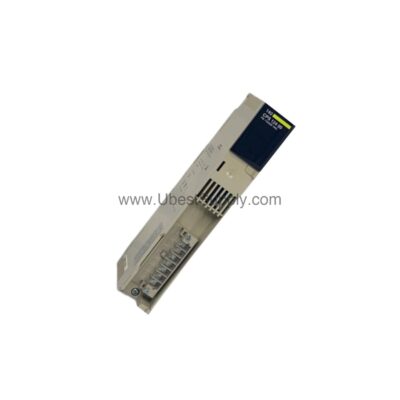
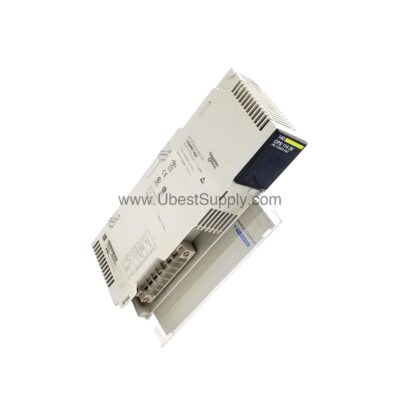
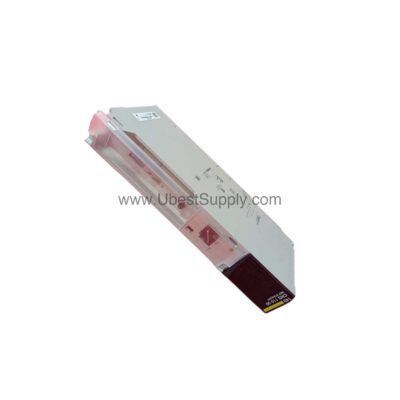
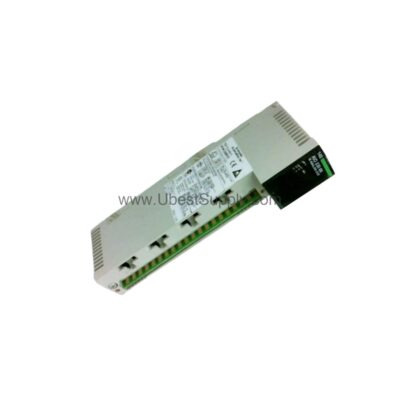
The 1768-M04SE integrates motion control for CompactLogix systems. This module manages up to four Kinetix drives using fiber-optic SERCOS Class B communication. It supports position or velocity modes with ultra-fast update times as low as 0.5 milliseconds. Engineers achieve precise synchronization.
Theme A: Product Procurement & Buyer Guide
Selecting the correct motion interface module directly impacts system performance and overall cost per axis. The 1768-M04SE offers distinct advantages for multi-axis applications. It reduces reliance on a separate PLC for motion tasks.
Controller Compatibility Check: Use this module only with 1768-L43 (supports one module instance) or 1768-L45 (supports two module instances) controllers. Verify your processor revision for electronic keying. This guarantees reliable integration.Drive Pairing Strategy: The 1768-M04SE works with Kinetix 2000, Kinetix 6000, Kinetix 7000, and Ultra 3000 SERCOS drives. This flexibility allows you to match drive power levels to your specific axis requirements.Data Rate and Axis Count: For two drives, select 4 Mbps with a 0.5 ms cycle time. For four drives at 4 Mbps, expect a 1 ms cycle. At 8 Mbps, all four drives achieve a 0.5 ms update. Choose the rate that suits your speed needs.
Cable Selection Impact: Use plastic fiber-optic cables (2090-SCEPxx-0, 2090-SCVPxx-0, 2090-SCNPxx-0) or glass cables (2090-SCVGxx-0). Plastic cables operate from -55 to 85 °C. Glass cables handle -20 to 85 °C. Match the cable jacket to your environmental hazards.Power Budget Calculation: The module draws 969 mA at 5.2 VDC from the backplane. It draws 0 mA at 24 VDC. Calculate your total backplane current. This module dissipates 5.04 W of power.Mounting and Space: Install this single-slot module on a DIN rail or panel. Its dimensions are 132 x 57 x 105 mm (5.2 x 2.23 x 4.14 in). It weighs only 0.2 kg (2 lbs shipping). Plan your enclosure layout precisely.Theme D: Expert Technical Evaluation & Performance Review
This interface delivers high determinism for demanding motion profiles. It uses SERial real-time Communication System (SERCOS) protocol. The module supports Class B for position or velocity control.

Cycle Time Precision: Achieve a 0.5 ms update time for two drives at 4 Mbps. With four drives at 8 Mbps, maintain that same 0.5 ms cycle. This low latency enables tight synchronization between axes.Fiber Optic Robustness: The F-SMA screw connector provides a secure connection. Plastic cable cores measure 980 µm ± 60 µm. Glass cable cores measure 200 µm ± 4 µm. This ensures reliable data transmission over noise-free links.Environmental Tolerance: Plastic cables operate from -55 to 85 °C. The module itself has a continuous isolation voltage of 30 Volts. This protects against ground loops.Current and Power Analysis: The bus current draw is 969 mA at 5.2 VDC. The backplane current at 24 Volts is 1.4 Amps. Total power consumption is 33.6 Watts. The power dissipation is only 5.04 W, which keeps thermal load low.Auxiliary Feedback Support: The module covers four axes plus two auxiliary feedback axes. This allows secondary encoder inputs for dual-loop control. It enhances positioning accuracy.Bend Radius Constraints: Plastic cables without a jacket require only a 25 mm bend radius. Nylon-jacketed plastic cables need 40 mm. Glass cables require 30 mm. Follow these limits to prevent signal loss.
Logistics & Standard Packaging Details
One Allen-Bradley 1768-M04SE SERCOS interface module.Product series may be A or B.Shipping weight is 2 lbs.Dimensions are 8 x 8 x 5 inches.Express delivery via FedEx, UPS, and DHL.Deep-Dive Technical FAQ
Q1: Can I use this module with an older 1768-L43 controller? Yes, the 1768-M04SE works with 1768-L43 controllers. You can install only one module instance with this processor. The system handles up to four axes total.
Q2: What cycle time do I get with four drives at 8 Mbps? You achieve a 0.5 ms cycle time with four drives operating at 8 Mbps. This provides high-speed synchronization for demanding applications.
Q3: How do I choose between plastic and glass fiber-optic cables? Use plastic cables for indoor, short-distance runs from -55 to 85 °C. Use glass cables for longer distances or where lower signal attenuation is needed.
Q4: What happens if my fiber-optic cable bend is too sharp? Exceeding the specified bend radius can cause signal degradation or complete link loss. Always respect the minimum radius for your cable type.