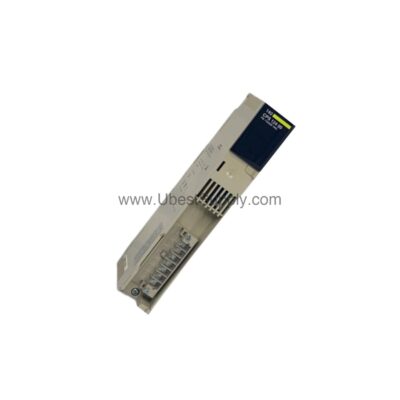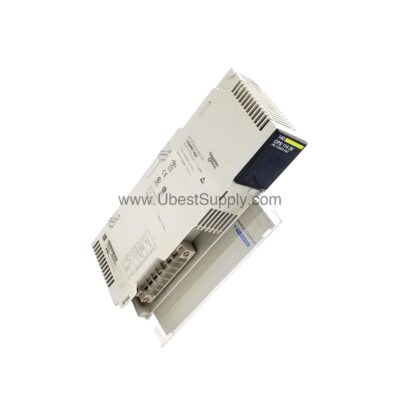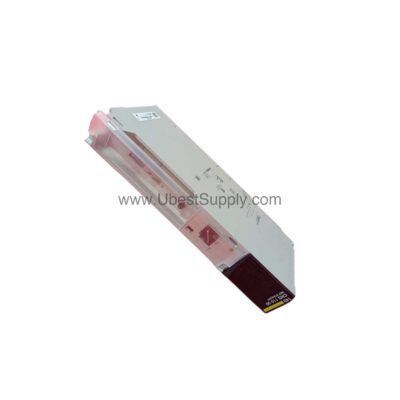

Master the Allen-Bradley 1769-OB32T.
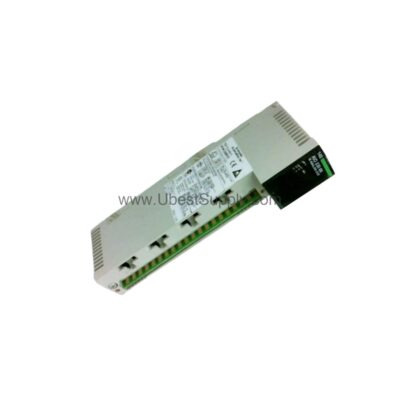
The Allen‑Bradley 1769‑OB32T output module solves a critical pain point in discrete control.It maintains reliable 24V DC switching across 32 points in electrically noisy environments like oil refineries. Consequently, operators reduce unplanned downtime because the module’s solid‑state design eliminates contact wear. Furthermore, its integrated diagnostics flag open‑load conditions before they escalate. This module also integrates directly into CompactLogix systems. Therefore, it allows seamless data exchange without extra wiring or protocol converters.

Technical Insights on the 1769-OB32T
Three key parameters boost production efficiency and extend equipment lifespan. First, the 0.5 A per output ensures each point can drive small solenoid valves or indicator lamps. Thus, this simplifies panel layout by removing the need for external relays. Second, the ‑20 °C to +60 °C operating range lets the module function reliably in unheated outdoor enclosures. This is common in power plants and pharmaceutical processing areas. Third, the 2000 Vrms isolation between I/O and backplane prevents ground‑loop currents. This protects sensitive CPU logic from voltage surges and communication corruption.
Installation & Maintenance for the 1769-OB32T
- For high‑vibration environments, secure each terminal wire with ferrules. Also, torque the screw to 0.5 N·m.
- Specifically, use a 2‑mm flat‑blade screwdriver and a torque limiting driver. This helps you avoid stripping the screw head.
- Additionally, install an external 24V DC transient suppressor across the module’s bus power terminals. The 1769‑OB32T lacks built‑in surge protection, so this guards against inductive load flyback.
- Finally, verify the module’s OK LED is solid green after power‑up. A flashing LED indicates a configuration mismatch that you must correct via Studio 5000.

Buyer's Guide (FAQ) for the 1769-OB32T
- 1. Is the Allen‑Bradley 1769‑OB32T still in active production?
- Yes, Rockwell Automation lists this module as fully active with no announced phase‑out date. Consequently, you can order it through standard distribution channels.
- 2. What upgrade indicators suggest I should replace an older 1769‑OB32 (non‑T) with the OB32T?
- Replace the non‑T version when you require electronic short‑circuit protection or missing‑load detection. The OB32T adds these diagnostics, whereas the older OB32 relies on external fuses.
- 3. Does the 1769‑OB32T work with legacy 1769 backplanes from the early 2000s?
- Absolutely. The module is backward‑compatible with all CompactLogix 1769 backplanes, including the 1769‑A10, ‑A14, and ‑A17 models. No firmware update is needed.
- 4. Can I use this sourcing module with a sinking sensor to control a load?
- No. The 1769‑OB32T provides a sourcing output (current leaves the module to the load). For sinking output requirements, you must choose the 1769‑OB16I or OB32 (non‑T) models.
- 5. How do I know when to replace the module due to end‑of‑life wear?
- Monitor the module’s internal cycle counter via the web page diagnostic. When the count approaches 100 million operations per channel, schedule a replacement. Premature failures typically show repeated blown outputs.