 In Stock
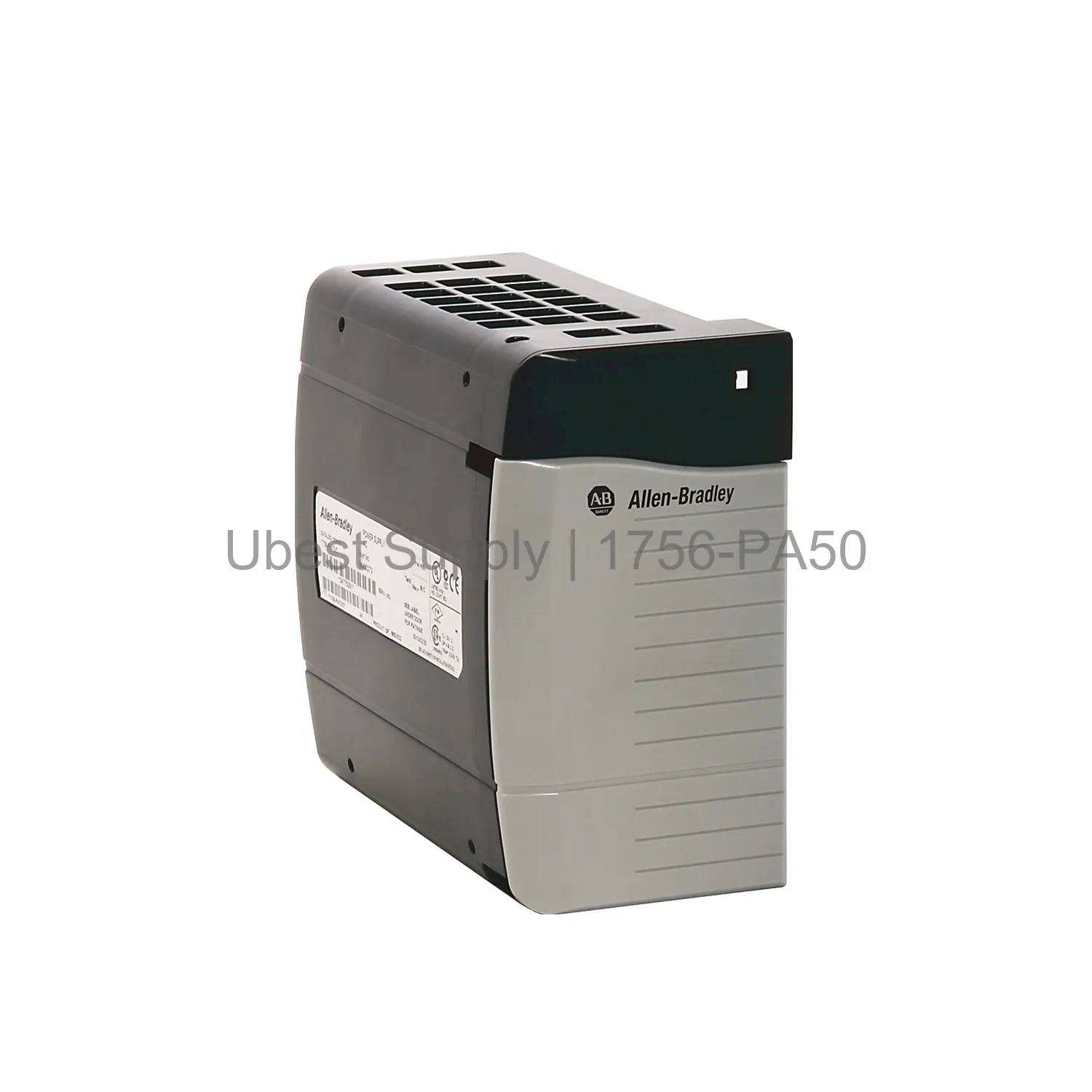
 Allen-Bradley 1756-PA50 ControlLogix Power Supply 85-265VAC
1756-PA50
The Allen-Bradley 1756-PA50 is a standard ControlLogix power supply. It provides reliable...

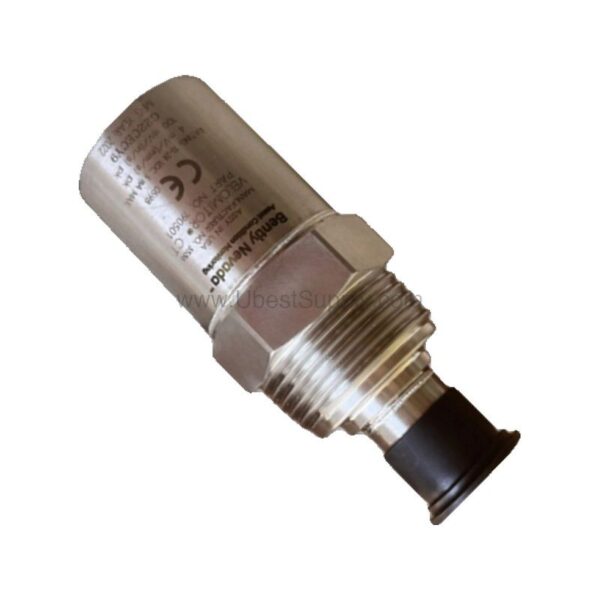
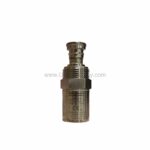
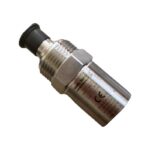
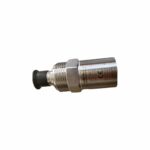
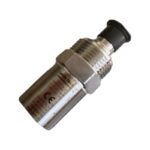
In the evolving landscape of industrial machinery monitoring, accurate vibration measurement is essential for predictive maintenance and asset protection. The 190501-02-00-00 from Bently Nevada addresses this need as a Velomitor CT velocity transducer. It converts mechanical vibration into an electrical signal, enabling condition monitoring of rotating equipment such as turbines, compressors, and pumps.
This transducer is designed for reliability and performance. With a sensitivity of 3.94 mV/mm/s (100 mV/in/s) ±5%, it provides consistent output for trend analysis. Its frequency response covers 3.0 Hz to 900 Hz (180 to 54,000 cpm) within ±1.0 dB, making it suitable for a wide range of machinery speeds.
Built with a 316L stainless steel case, the 190501-02-00-00 withstands harsh industrial environments. It operates over a temperature range of -40°C to +85°C (-40°F to +185°F) and can endure shock up to 5000 g pk. These characteristics make it a dependable choice for continuous vibration monitoring.
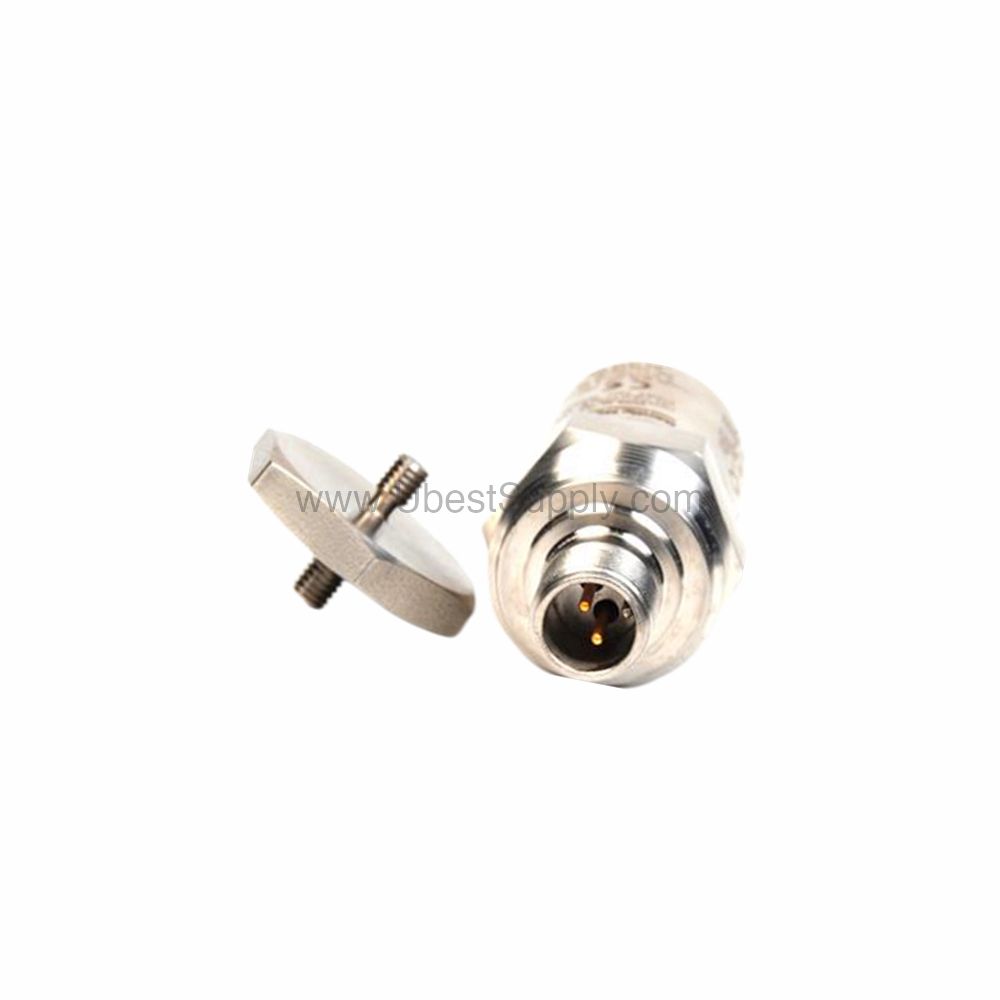
The 190501-02-00-00 offers several distinctive features that enhance its utility in industrial settings. Below are the core specifications:
One distinctive spec is the base strain sensitivity of 0.43 mm/s/μstrain. This low value ensures that mechanical stress on the mounting surface does not significantly affect the vibration reading, leading to more accurate measurements in real-world installations.
The 190501-02-00-00 is ideal for monitoring vibration in rotating machinery across various industries. It is commonly used in:
For example, in a petrochemical plant, the transducer can be mounted on a critical pump to detect bearing wear early. This allows maintenance teams to schedule repairs before a catastrophic failure, reducing downtime and repair costs. Moreover, its wide frequency response makes it suitable for both low-speed and high-speed equipment.
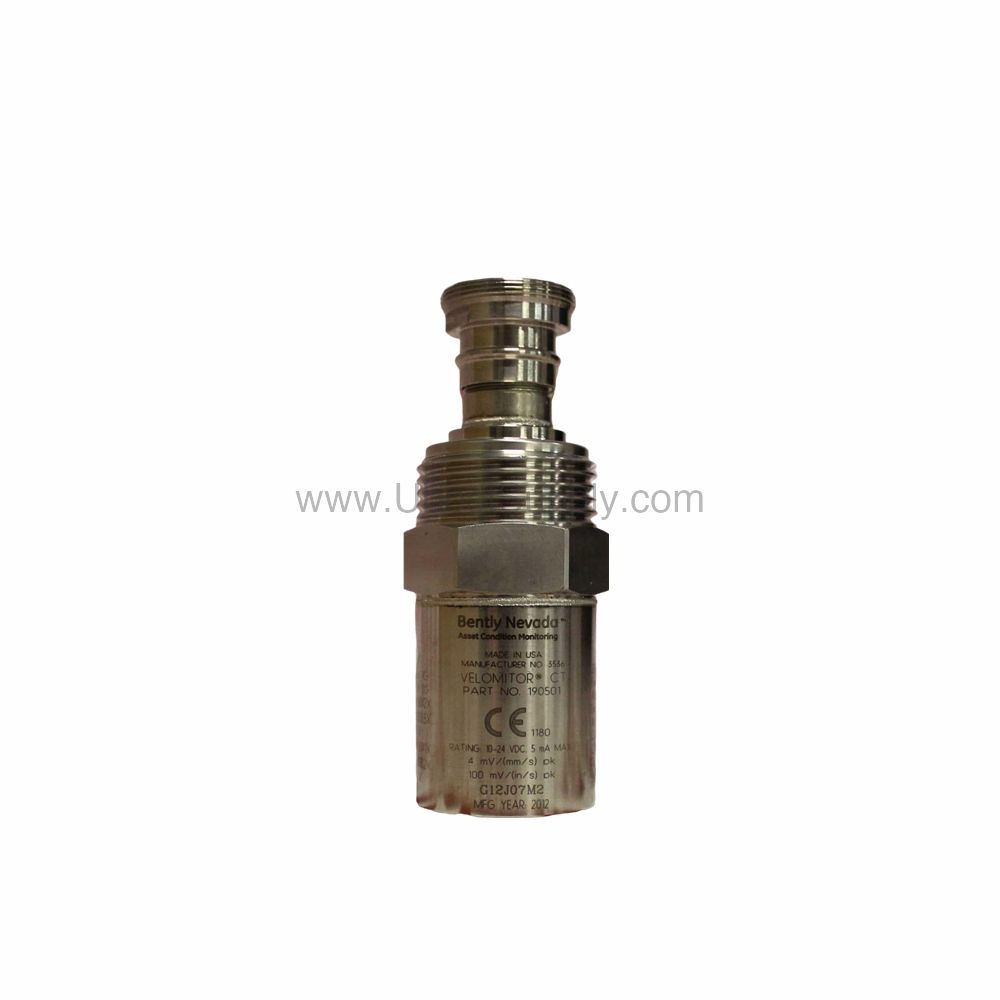
Proper installation is crucial for accurate vibration measurement. The 190501-02-00-00 features a stud mounting option (3/8-in 24 to 1/2-in 20) and a MIL-C-5015 connection interface. Follow these general guidelines:
Since the transducer can be mounted in any orientation, it offers flexibility in tight spaces. However, always refer to the manufacturer's manual for detailed installation instructions.
The 190501-02-00-00 is designed for long-term reliability with minimal maintenance. Its 316L stainless steel case resists corrosion, and the internal electronics are isolated from the case, reducing the risk of ground loops. To ensure consistent performance, consider the following:
By following these simple steps, you can extend the service life of the transducer and maintain accurate vibration data.
The 190501-02-00-00 is compatible with Bently Nevada monitoring systems and can be integrated into existing condition monitoring networks. Its output signal is a standard velocity signal, which can be connected to data acquisition systems or vibration analyzers. The MIL-C-5015 connector ensures a secure and reliable electrical connection.
For new installations, verify that the monitoring system accepts the transducer's sensitivity and bias voltage. The transducer's low output impedance (<400 Ω) allows for long cable runs without signal loss, making it suitable for large facilities.
While the 190501-02-00-00 is robust, occasional issues may arise. Here are some common problems and solutions:
If problems persist, consult the official Bently Nevada documentation or contact Petro Auto Tech for technical support.
A: The sensitivity is 3.94 mV/mm/s (100 mV/in/s) ±5%.
A: The maximum cable length is 305 metres (1,000 ft.) using cable part number 02173006 without signal degradation.
A: Yes, the transducer can be mounted in any orientation, offering installation flexibility.
A: The operating temperature range is -40°C to +85°C (-40°F to +185°F).
A: This specific model (Agency Approval Option 00) has no approvals. For intrinsically safe options, refer to models with approval options 01 through 04.
The 190501-02-00-00 is available through Petro Auto Tech, an industrial automation parts supplier. We ensure prompt delivery and competitive pricing. For inquiries about availability, lead times, or technical specifications, contact our team. We are committed to supporting your vibration monitoring needs.
| Part Number | 190501-02-00-00 |
| Condition | In Stock |
| Stock Status | In Stock (Ready to Ship) |
| Weight | 0.5 kg |
| Warranty | 12 Month |
Shipping Port: Xiamen
We ship worldwide via DHL, FedEx, UPS, TNT, and EMS. In-stock items are dispatched within 24 hours of payment confirmation. Tracking number will be provided after shipment.
Secure payment processing. Contact us for corporate account and bulk order pricing.
All products come with a 1-year warranty against manufacturing defects. We guarantee 100% new and original products sourced directly from authorized manufacturers.
In Stock  In Stock
  In Stock
  In Stock
  In Stock
  In Stock
  In Stock
  In Stock
 Stay informed with the latest industry insights, product announcements, and technical articles.