
Why Distributed I/O Matters in Modern Automation
Industrial networks increasingly rely on distributed I/O to reduce wiring costs and improve system flexibility. The Schneider OTB1C0DM9LP addresses this need by providing a compact I/O distributed module that connects directly to a CANopen bus. This approach simplifies installation and maintenance compared to traditional centralized I/O cabinets.
As factories adopt more decentralized architectures, modules like the OTB1C0DM9LP become essential building blocks. They allow sensors and actuators to be placed closer to the process, reducing cable runs and improving signal integrity. This trend aligns with the broader move toward Industry 4.0 and smart manufacturing.
Introducing the OTB1C0DM9LP from Schneider
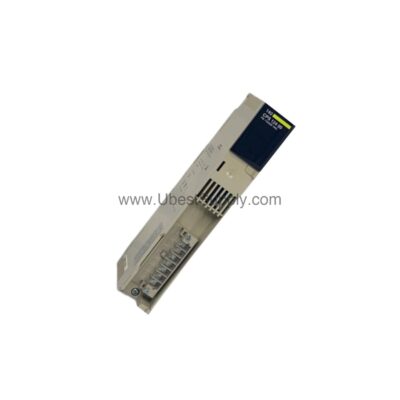
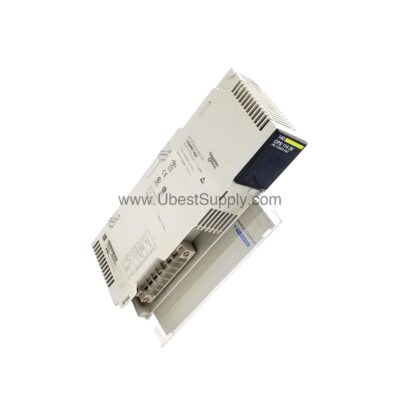
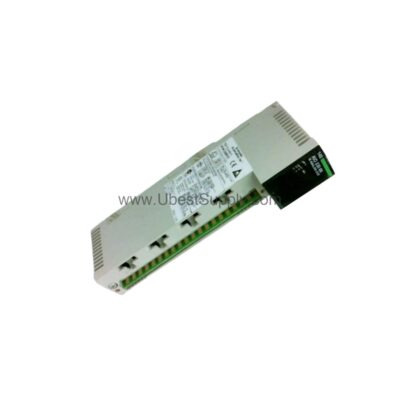
Petro Auto Tech now offers the Schneider OTB1C0DM9LP, a versatile I/O distributed module from the Modicon OTB range. It features 12 discrete inputs and 8 discrete outputs, making it suitable for a wide range of control applications. The module supports both sink and source input logic, and outputs include 2 solid-state PNP and 6 relay channels.
Engineers will appreciate the module's flexible mounting options, including DIN rail and panel mounting. With an IP20 rating, it is designed for use in protected industrial enclosures. The OTB1C0DM9LP also includes status LEDs for power, run, error, and per-channel I/O indication, simplifying diagnostics.
Technical Specifications Deep Dive
The OTB1C0DM9LP operates on a 24V DC supply with a voltage range of 20.4 to 26.2V. Its discrete inputs accept 24V DC and have a current draw of 5 mA or 7 mA depending on the channel. The module's input impedance ranges from 3.4 kOhm to 5.7 kOhm, and it offers configurable filtering times of 0 ms, 3 ms, or 12 ms.
For outputs, the solid-state channels provide 300 mA at 24V DC, while the relay outputs handle up to 2000 mA and can switch 240V AC or 30V DC. The module also includes two counting inputs with a 32-bit capacity and a counting frequency of 20 kHz or 5 kHz, plus two pulse generator outputs at 7 kHz. These features make it suitable for simple motion control and counting tasks.
Application Scenarios for the OTB1C0DM9LP
In a packaging line, the OTB1C0DM9LP can manage photo-eye sensors and actuate pneumatic valves via its relay outputs. The counting inputs can track product counts, while the pulse generators can drive stepper drivers for precise positioning. This module's CANopen interface allows seamless integration with PLCs and HMIs from various manufacturers.

Another common use is in material handling systems, where the module monitors limit switches and controls conveyor motors. Its ability to handle up to 64 devices per segment and bus lengths up to 1000 meters at lower baud rates makes it ideal for large installations. The module's robust electrical durability—500,000 cycles for relay outputs—ensures long-term reliability.
Customer Case Scenario: Upgrading a Legacy System
Consider a food processing plant that wants to modernize its bottling line. By replacing a proprietary I/O system with the OTB1C0DM9LP, the plant can standardize on CANopen, reducing spare parts inventory. The module's 12 inputs and 8 outputs are sufficient for the line's sensors and actuators, and the relay outputs can directly switch motor contactors.
This upgrade not only simplifies wiring but also improves diagnostic capabilities. The status LEDs and CANopen error reporting help maintenance teams quickly identify faults, reducing downtime. Over time, the plant expects a significant return on investment through reduced maintenance costs and increased production efficiency.
Compatibility and Integration with CANopen Networks
The OTB1C0DM9LP is designed for CANopen networks, supporting the DS 401 V2.1 profile and CSMA/MA multimaster access. It can be connected via daisy-chaining or tap junctions, with up to 64 slaves per network. The module supports baud rates from 10 kbit/s to 1 Mbit/s, with corresponding bus lengths ranging from 5000 meters to 20 meters.
Integration with Schneider's Modicon controllers is straightforward, but the module also works with third-party CANopen masters. Its SUB-D 9 connector and removable screw terminal block simplify field wiring. For expansion, the OTB1C0DM9LP supports up to 7 I/O expansion modules, allowing you to scale I/O capacity as needed.
Market Impact and Business Value
By choosing the OTB1C0DM9LP, manufacturers can reduce installation time and material costs associated with long cable runs. The module's compact size and DIN rail mounting save cabinet space, and its low power consumption (19W) contributes to energy efficiency. The relay outputs' high switching capacity (2000 mA) means fewer external relays are needed, further reducing cost.

From a business perspective, the module's reliability and long electrical durability translate to lower total cost of ownership. The 500,000-cycle relay life minimizes replacement frequency, and the module's wide operating temperature range (0 to 55°C) ensures stable performance in demanding environments. This makes the OTB1C0DM9LP a sound investment for automation projects.
Comparison with Similar I/O Modules
When compared to other distributed I/O modules in the market, the OTB1C0DM9LP stands out for its combination of input/output count and CANopen support. Many competing modules offer fewer I/O points or lack relay outputs. The table below highlights key differences:
| Feature | OTB1C0DM9LP | Typical Competitor |
|---|---|---|
| Inputs | 12 discrete | 8 discrete |
| Outputs | 2 solid-state + 6 relay | 4 solid-state |
| Relay Output Current | 2000 mA | 500 mA |
| Counting Inputs | 2 (32-bit) | None |
| Pulse Generators | 2 (7 kHz) | None |
This comparison shows that the OTB1C0DM9LP offers more functionality, especially for applications requiring relay switching or high-speed counting. Its CANopen interface is widely adopted, ensuring interoperability.
Frequently Asked Questions About the OTB1C0DM9LP
What is the maximum bus length for the OTB1C0DM9LP?
The maximum bus length depends on the baud rate. At 10 kbit/s, the bus can extend up to 5000 meters, while at 1 Mbit/s, it is limited to 20 meters. The module supports tap-off lengths up to 600 meters at lower speeds.
Can the OTB1C0DM9LP handle both NPN and PNP sensors?
Yes, the discrete inputs are compatible with both NPN and PNP sensors, and the input logic can be configured as sink or source. This flexibility simplifies integration with existing sensors.
What are the output types and their ratings?
The module has 2 solid-state PNP outputs rated at 300 mA and 6 relay outputs rated at 2000 mA. Relay outputs can switch 240V AC or 30V DC, making them suitable for various loads.
Why Choose Petro Auto Tech for Your Automation Needs
Petro Auto Tech is a trusted distributor of industrial automation parts, offering genuine Schneider products like the OTB1C0DM9LP. Our team provides technical support to help you select the right components for your application. We ensure fast delivery and competitive pricing to keep your projects on schedule.
With years of experience in the industry, Petro Auto Tech is committed to customer satisfaction. Whether you are upgrading an existing system or designing a new one, we are here to assist you. Contact us today to learn more about the OTB1C0DM9LP and other automation solutions.
Conclusion and Future Outlook
The Schneider OTB1C0DM9LP is a robust and flexible I/O module that meets the demands of modern distributed control systems. Its combination of inputs, outputs, counting, and pulse generation capabilities makes it a versatile choice for many applications. As industrial networks continue to evolve, modules like this will play a key role in enabling smarter, more efficient factories.
For engineers and plant managers, investing in reliable components like the OTB1C0DM9LP is a step toward future-proofing their operations. With Petro Auto Tech as your partner, you can access high-quality automation parts and expert guidance. Contact us to place your order or request a quote.