Why the TWDLMDA20DRT Matters in Modern Automation
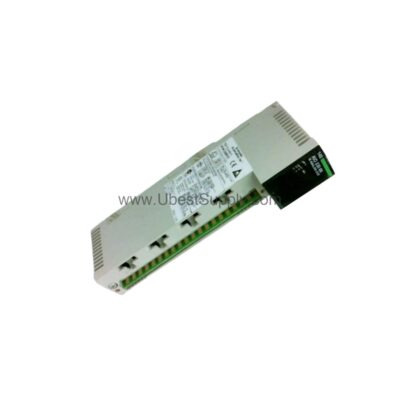
Industrial control systems increasingly demand compact yet flexible controllers that can handle a mix of discrete I/O and communication tasks. The Schneider Electric TWDLMDA20DRT, part of the Twido family, addresses this need with a modular design that supports up to seven expansion modules. This buyer's guide helps you assess whether this controller fits your specific application requirements.
Key Specifications at a Glance
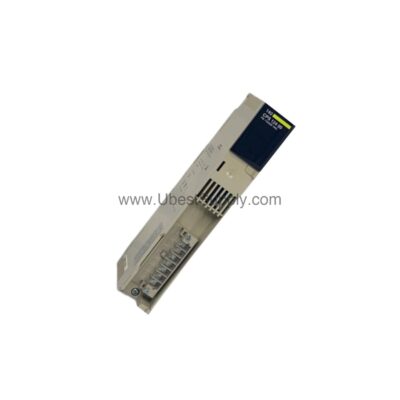
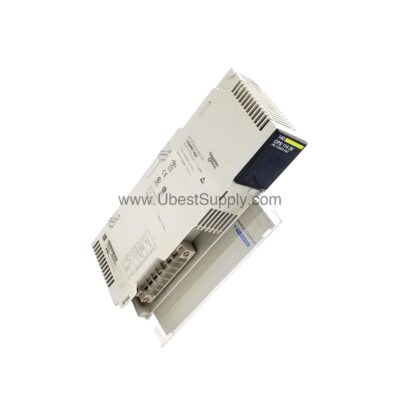
The TWDLMDA20DRT operates on a 24 V DC rated supply voltage, with an input voltage range of 20.4...26.4 V. It provides 12 discrete inputs, each accepting 24 V DC, and 8 discrete outputs: 6 relay outputs and 2 transistor (source) outputs. The relay outputs handle up to 2 A per channel, while the transistor outputs deliver 0.36 A per channel, making the unit suitable for driving small actuators and contactors.
For communication, the controller includes a non-isolated serial link mini DIN supporting Modbus/character mode master/slave RTU/ASCII (RS485) half duplex at 38.4 kbit/s. This allows integration into many existing industrial networks without additional hardware. The built-in 3000-instruction program memory (expandable to 6000 with a 64 K memory cartridge) provides ample space for moderate control logic.
Evaluating I/O Configuration and Flexibility
When selecting a PLC, the number and type of I/O points are critical. The TWDLMDA20DRT offers 12 sink or source discrete inputs, giving you wiring flexibility. The 8 outputs combine relay and transistor types, letting you switch both AC and DC loads. The relay outputs can switch 2 A at 30 V DC or 240 V AC (resistive or inductive), while the transistor outputs are limited to 24 V DC and 0.36 A.
Expansion capability is another strong point. With two free slots and support for up to seven I/O expansion modules, you can grow the system as your process evolves. The maximum I/O count depends on the connection method: up to 244 I/O with HE-10 connectors, 188 with spring terminals, or 132 with removable screw terminals. This scalability makes the controller suitable for both small machines and larger distributed systems.

Application Scenarios: Where the TWDLMDA20DRT Excels
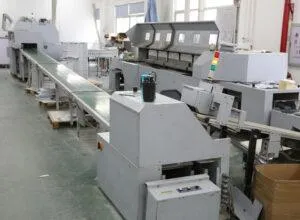
This controller is well-suited for packaging machinery, material handling systems, and small assembly lines where discrete control and basic motion are required. For example, a conveyor system with multiple sensors and pneumatic actuators can be managed using the 12 inputs and 8 outputs, while the Modbus port allows connection to a supervisory SCADA system.
Another common use is in HVAC control, where the controller can manage temperature sensors (via the 0...10 V analog input) and relay outputs for fans or dampers. The built-in PID function and event processing enhance its capability for closed-loop control tasks.
Customer Case Scenario: A Hypothetical Upgrade
Imagine a small bottling plant that currently uses a relay logic system. By replacing it with the TWDLMDA20DRT, the plant gains programmable control, easier troubleshooting, and the ability to log production data. The 24 V DC inputs interface directly with existing proximity sensors, and the relay outputs drive the bottle filler and capping units. The plant engineer can program the sequence using TwidoSoft software and monitor performance via the Modbus link.
Compatibility and Integration Considerations
Before purchasing, verify that the TWDLMDA20DRT is compatible with your existing power supply and field devices. The controller requires a 24 V DC supply, and the inputs are designed for 24 V DC sensors. The relay outputs can switch AC or DC loads, but you must respect the current and voltage limits. For communication, the RS485 Modbus port supports RTU and ASCII protocols, allowing connection to many HMIs and SCADA systems.

Also consider the memory options. The base unit includes 3000 instructions of program memory, but if your application requires more, you can install a 64 K memory cartridge in one of the free slots. The real-time clock option is useful for time-stamping events and scheduling tasks.
Market Impact and Business Value
Investing in a reliable PLC like the TWDLMDA20DRT can reduce downtime and improve productivity. The solid-state transistor outputs provide fast response times (5 µs) for high-speed counting or pulse outputs, while the relay outputs offer robust switching for inductive loads. The controller's compact size (48 mm width) saves panel space, and the removable screw terminals simplify wiring and maintenance.
From a cost perspective, the modular design means you only pay for the I/O you need initially, with the option to expand later. The long battery life (10 years) for the internal RAM ensures your program and data are retained during power outages, reducing the risk of data loss.
Frequently Asked Questions
What is the difference between the relay and transistor outputs on the TWDLMDA20DRT?
The relay outputs (Q0.2 to Q0.7) can switch up to 2 A at 30 V DC or 240 V AC, making them suitable for inductive loads like contactors and solenoids. The transistor outputs (Q0.0 and Q0.1) are solid-state, providing faster response times (5 µs) and longer life, but they are limited to 24 V DC and 0.36 A. Choose relay outputs for AC loads or higher currents, and transistor outputs for high-speed switching or DC loads.
Can the TWDLMDA20DRT communicate with a Modbus network?
Yes, the controller has a non-isolated serial link (mini DIN) that supports Modbus master/slave RTU/ASCII (RS485) half duplex at 38.4 kbit/s. This allows it to communicate with Modbus-compatible devices such as HMIs, drives, and sensors. For longer distances or better noise immunity, consider using an isolated RS485 converter.
How many expansion modules can I add to the TWDLMDA20DRT?
The controller supports up to seven I/O expansion modules, with two free slots available on the base unit. The maximum number of I/O points depends on the connection type: 244 with HE-10 connectors, 188 with spring terminals, or 132 with removable screw terminals. This flexibility lets you tailor the system to your exact I/O count.
Conclusion: Making an Informed Choice
The Schneider Electric TWDLMDA20DRT offers a balanced mix of I/O, communication, and expansion capabilities for small to medium automation tasks. Its 24 V DC operation, relay and transistor outputs, and Modbus support make it a versatile choice. Before ordering, confirm the current lifecycle status and availability with Petro Auto Tech, as this information may change. For detailed programming and wiring instructions, refer to the official Schneider Electric documentation.